public interactive project - BuskUS

problem statement
Today ´s audience needs a method of communicating and engaging with buskers without direct contact, with the aim to promote and increase profitability of street performance.
design concept
Stage1: The Launch
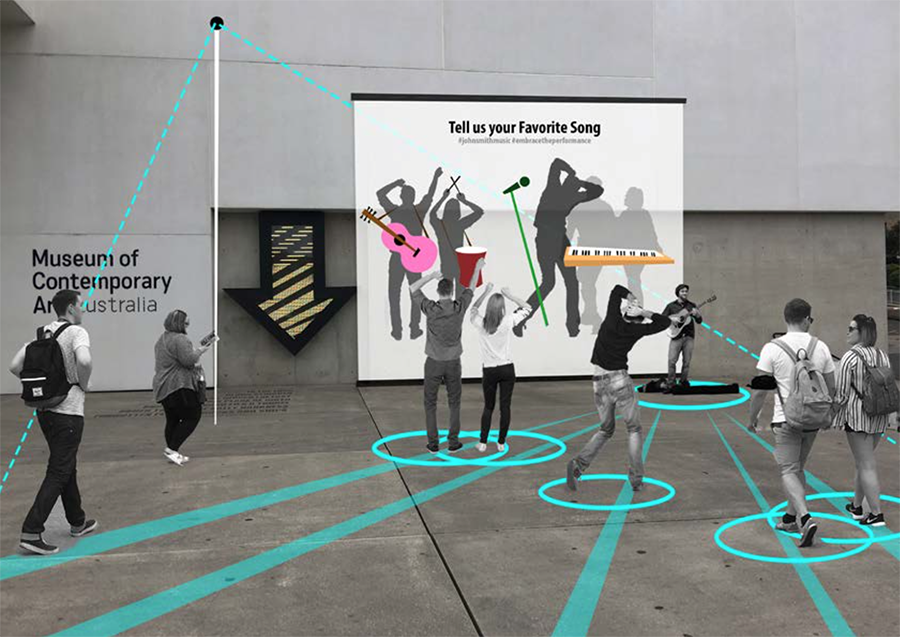
The launch would be about allowing the audience to join the busker. This
would be achieved through two elements. A spotlight, which shines on each
person and follows them and a real-time silhouette of them on a projector
screen tracking them so that an instrument appears placed on their body.
The aim of this would be to draw the audience in, to encourage them to vote
or suggest (depending on the number of audience) the next song. This would
be done in two way, either by using smart phones (social media/bluetooth)
to send in requests and the second would be using a touch screen placed
next to the projector screen allowing the audience to select their song.
The theme is based around the hashtag #embracetheperformance as it is
about creating a community around the busker.
Stage 2: The Implementation
Following the launch, buskers around Sydney ´s CBD would have a tablet set
up next to them where the audience could select a song from the options.
Additionally the audience could also recommend or vote for a song through
social media have using the hashtag #embracetheperformance along with
their personalised hashtag #sammcmahonmusic to choose the song. This
would have the added benefit, it would encourage them to follow and share
them on social media.
Note: The launch is the key area tested as it uses all the same with additional
elements to the implementation stage
branding
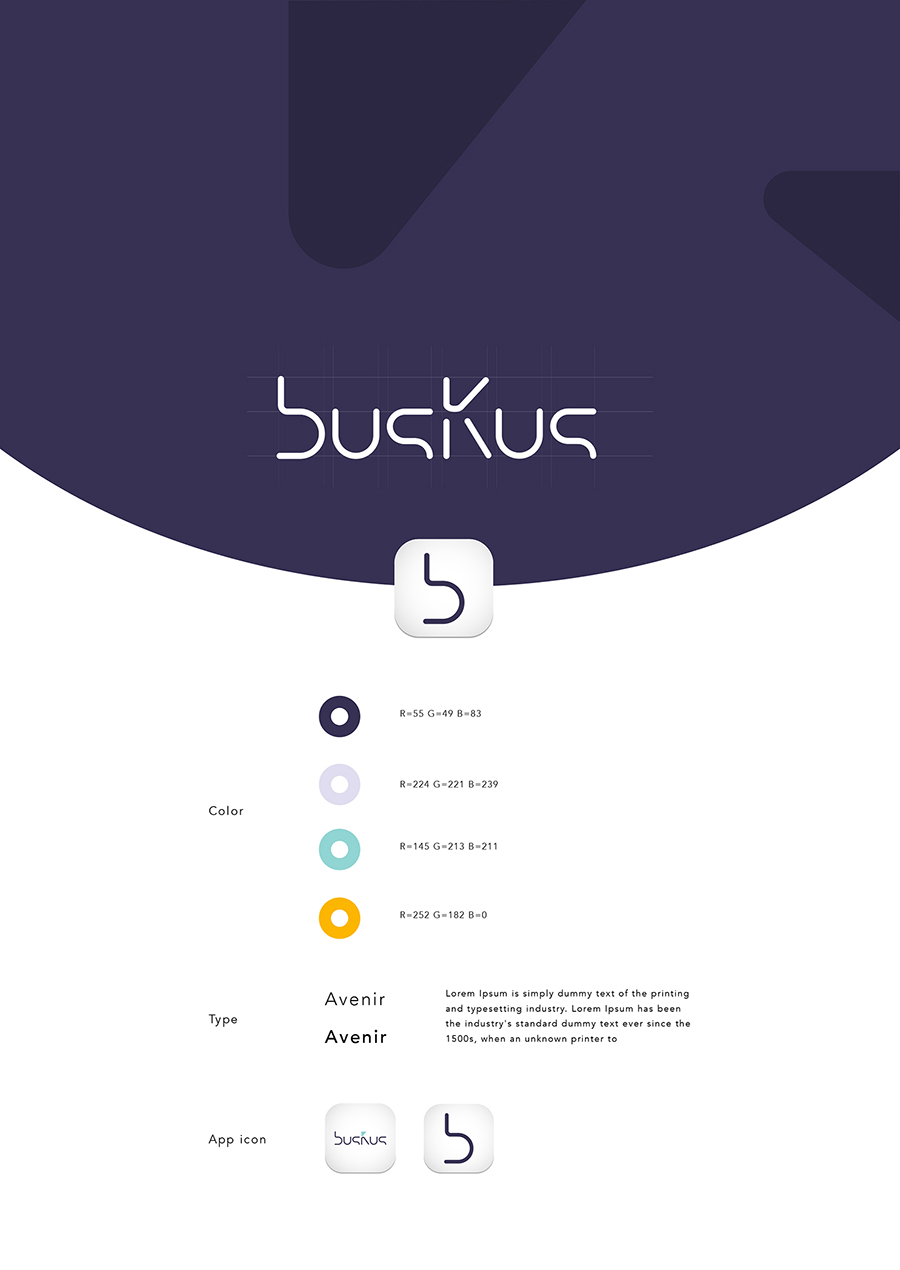
The logo was designed to be bold, moden but also quirky and unique to represent buskers. Similarly the typefaces were chosen as they are modern and sans-sarif to minimise the reading effort and give friendly and relaxing feeling. The colour purple was chosen as our primary colour as it stands for independance, the green and orange are friendly and approachable to match out tagline ¨embrace the busker¨.
stage 01
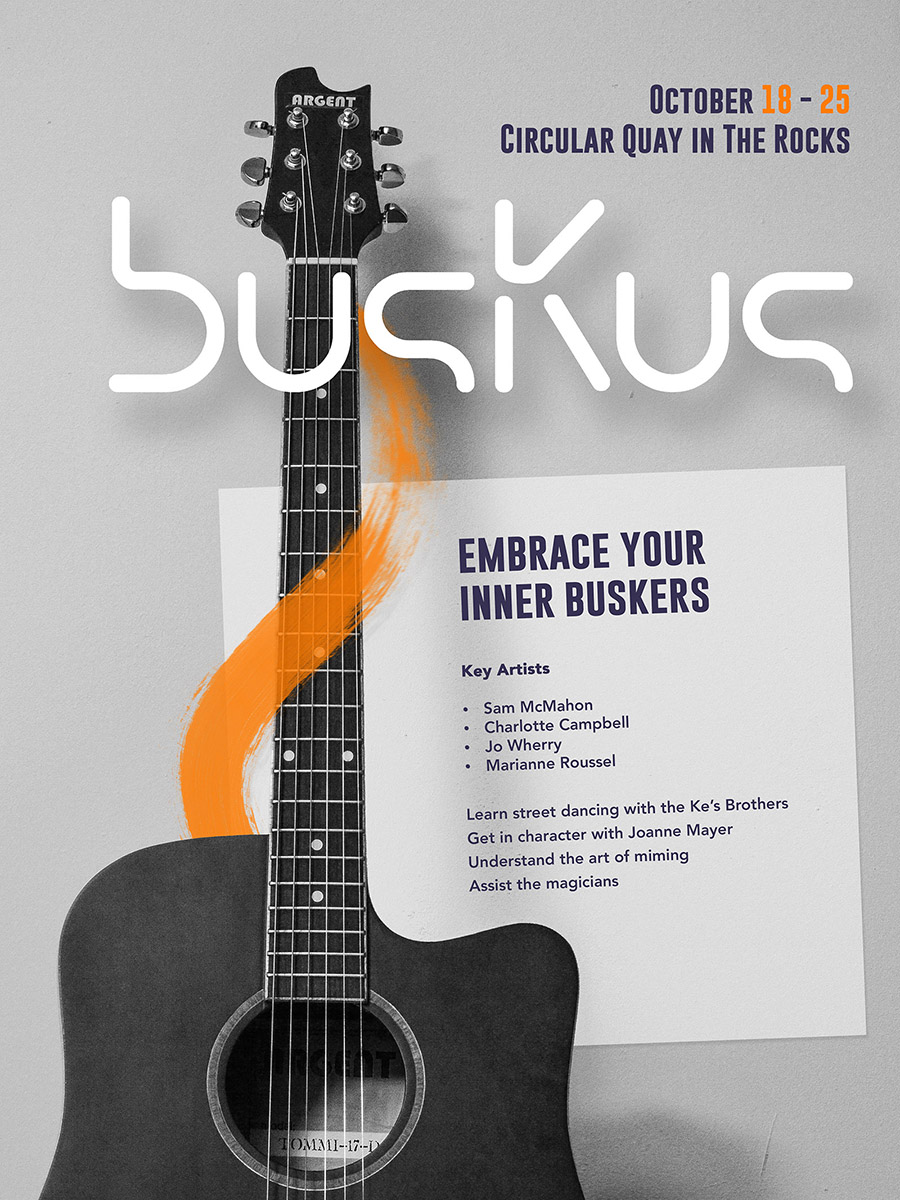
Stage 1 is a busking festival. The BuskUs
festival is unique because it is not only about
displaying Sydney´s famous busking culture but also
about allowing the audience to participate. The festival
will run for one week from October 18th to 25th.
The festival will have a series of musicians situated
around The Rocks area, Circular Quay. Each performer
is connected to the BuskUs app, so the audience can
send in song requests.
Outside the MCA is the main event. This is
where the most well know buskers will perform. There
will be a large screen set up on the wall. Projected
onto the wall will be the audiences silhouettes. The
silhouettes will be manipulated so that they appear to
be playing instruments. The purpose of this is that it
will appear like they are playing along with the busker.
Additionally, they will have a spotlight following them,
drawing them in to add to the atmosphere.
The rest of the festival will consist of other events
audience member can participate in such as; learning
to street dance, understanding the secrets behind
magic tricks and how to be a human statue.
stage 02
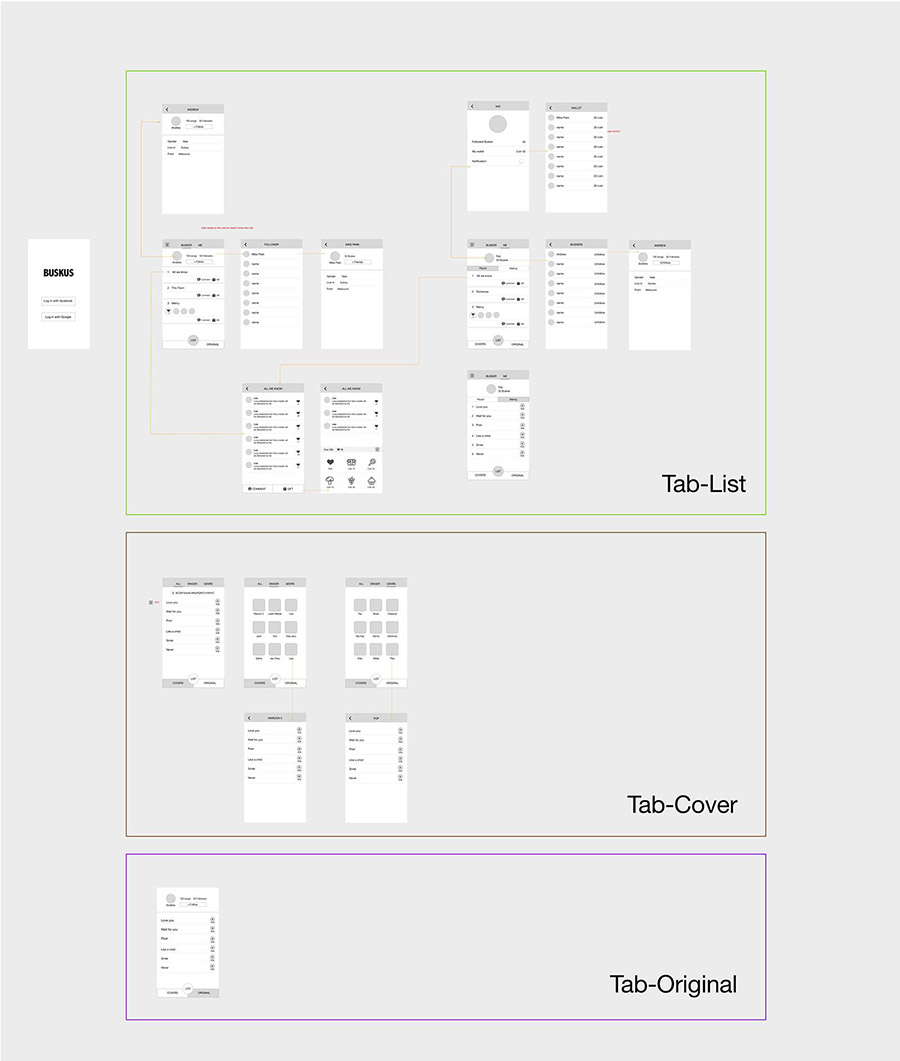
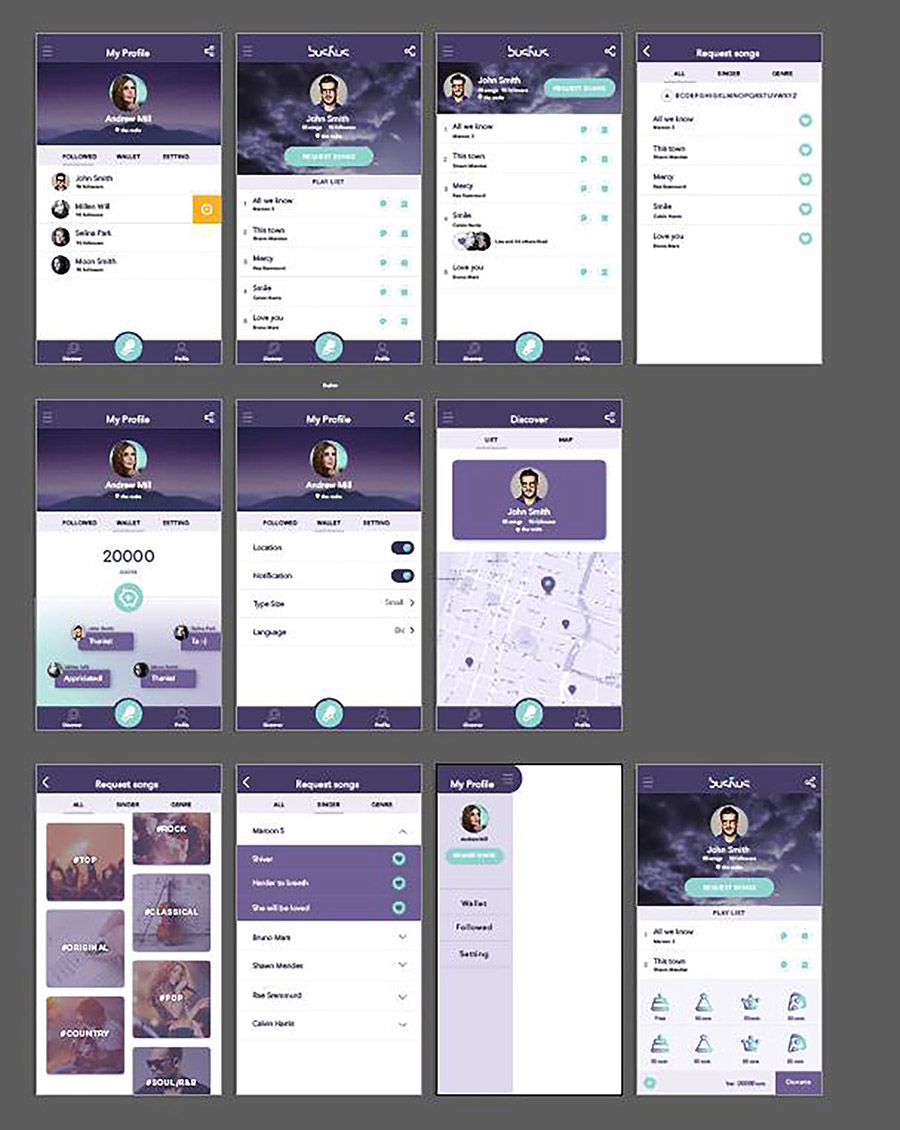
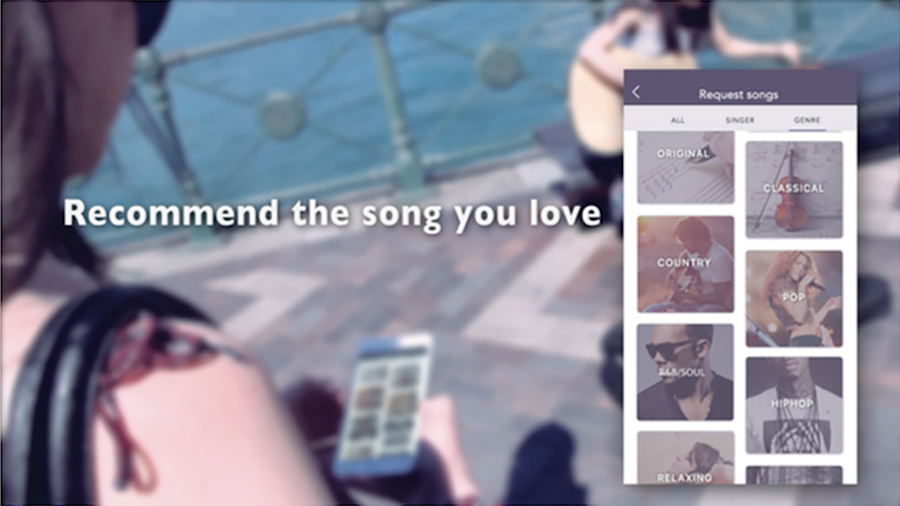
The second stage of BuskUs is an app/website.
The purpose of this interface is to assist the audience
with sending in song requests to the busker. The app
has two sides, the busker´s and the audience´s. The
busker can put up a library of songs he can play and
the audience can select from these songs which one
they would like the busker to hear.
The busker can then see the votes from the audience
and choose the song he is going to play based on
demand.
The busker is always in control and can choose whether
or not he wishes to add a song from the votes page to
his playlist. He can also choose to add his own choice
of song straight from the library if he wishes.
User Test Method
1.Manual observation:
Focus question: The time taken to engage in the program.
Tasks:
1.Imagine first seeing the screen on the street, what to do?
2.The busker is playing a song you don´t like, what to do?
3.If you want to get more info about the buskers, what to do?
(Preece, Rogers, Sharp, Benyon, Holland & Carey, 1994).
2.Logging:
Location, background music.
Ask users to talk out their thinking load, explaining what they´re doing.
3.Semi-structured interview:
¨There’s no better way to understand the hopes, desires, and aspirations of those
you´re designing for than by talking with them directly ¨ (The Field Guide To
Human-Centered Design, 2015).
A series of adaptable questions will be asked after using the displays with the
intention of understanding the effectiveness.
coding methids for stage 01
Libraries:
OpenCV
Video
For main screen
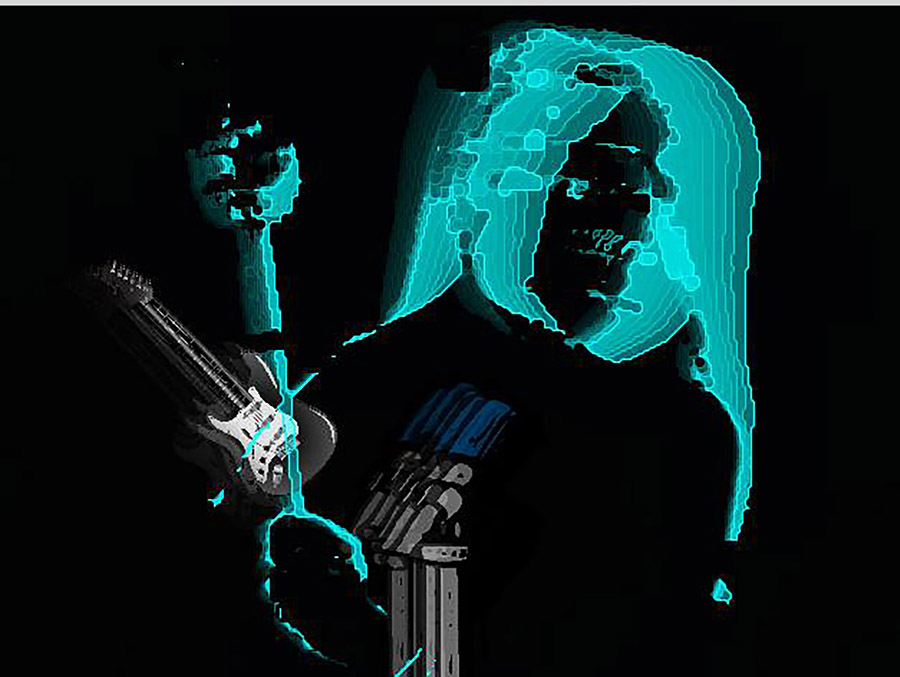
The logic behind the code is based on the face tracking
in OpenCV. Images captured from Video are written
repeatedly frame by frame. As long as there is a human
face detected, the image of the instrument will be
displayed in a certain format according to the size and
position of the face.
At the same time the contour is drawn to highlight the
shape of participant´s body
For the spot light
Since the camera for spot light is set overhead of
the people, the contour on OpenCV is drawn on the
screen, and the area of it is calculated. If the area is in
a certain number range, there will be an ellipse drawn
around the central point of that contour as well as a
straight line connecting between the position of busker
and it.

Final Changes
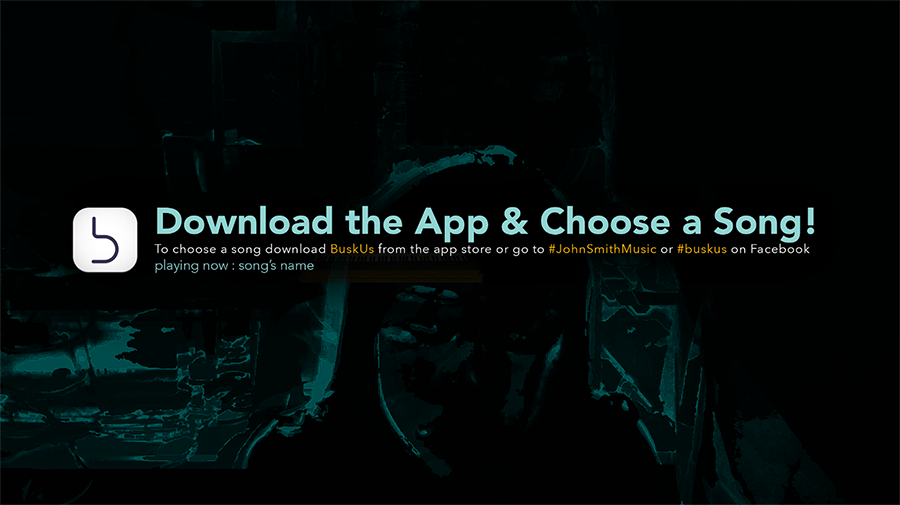
According to the feedback from user test 02, some
participants didn´t notice the text initially. Some participant
didn´t want to read the sentence because it is was long and
unclear. There was only few participant who read the text
from the beginning leading them to engage with the online
activity. Users said they didn´t mind if the text became the
screens feature in between the songs.
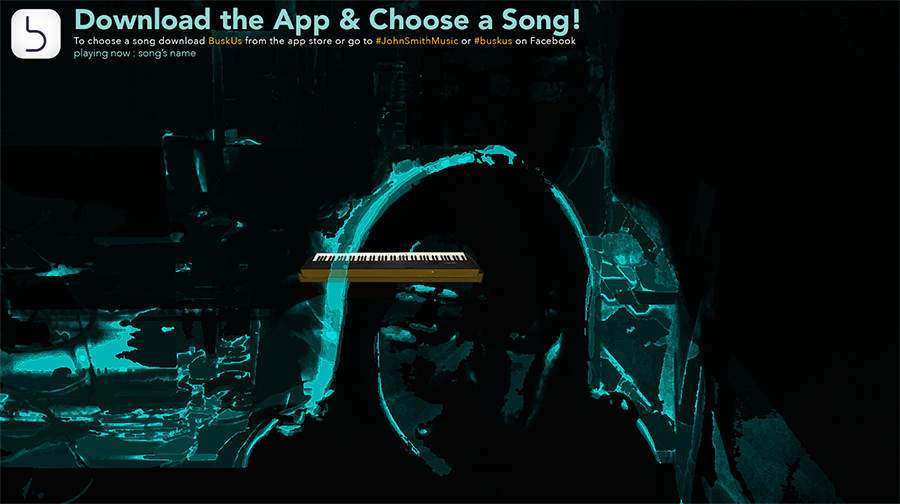
The result is to make the text appear as it is in
however either every 3 minutes or between songs, the text
would move to the center of the screen and enlarge.
Ensuring that they noticed the text
Stage 02 Sitemap and Mockup